What is Infant CPR?
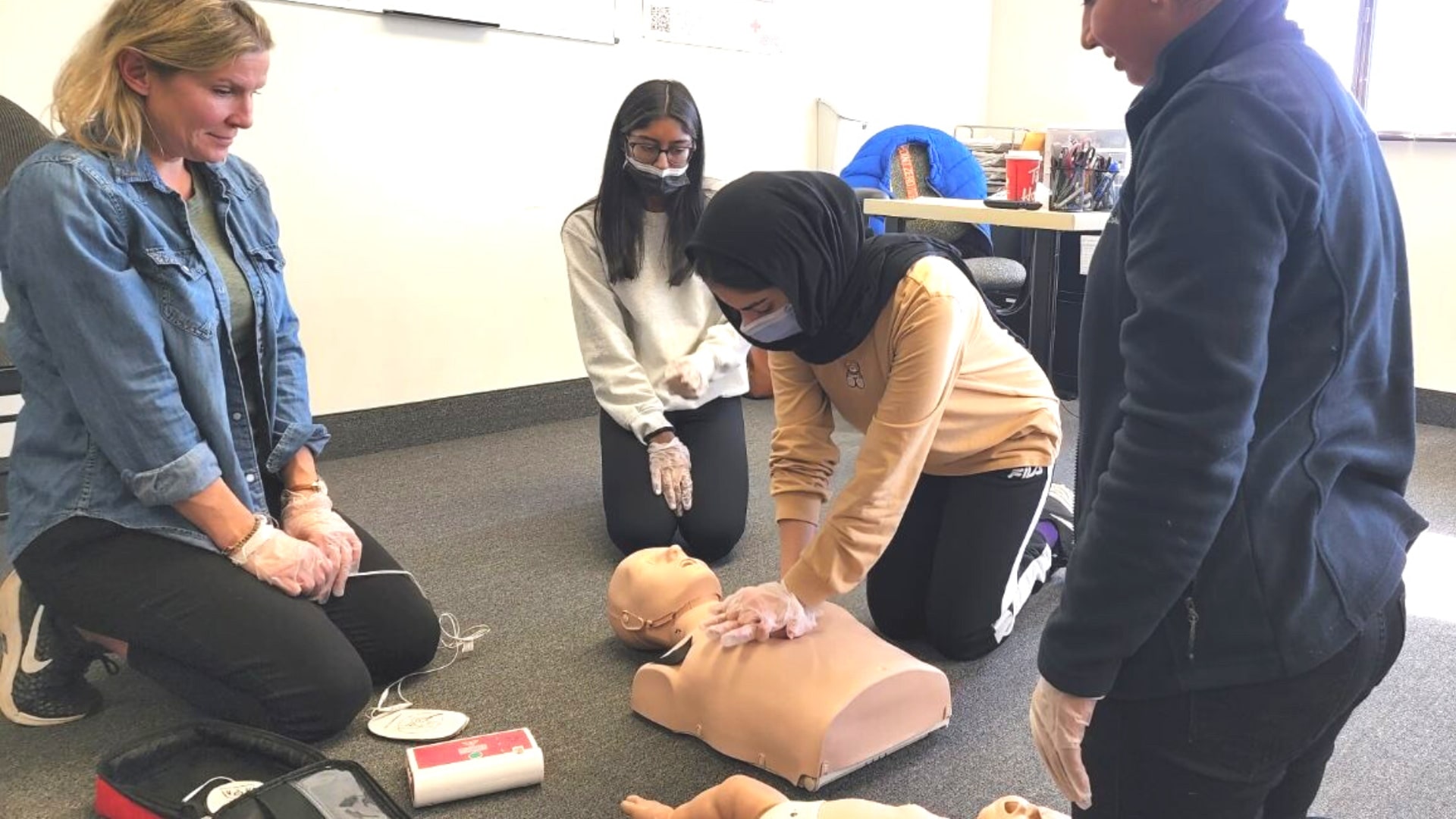
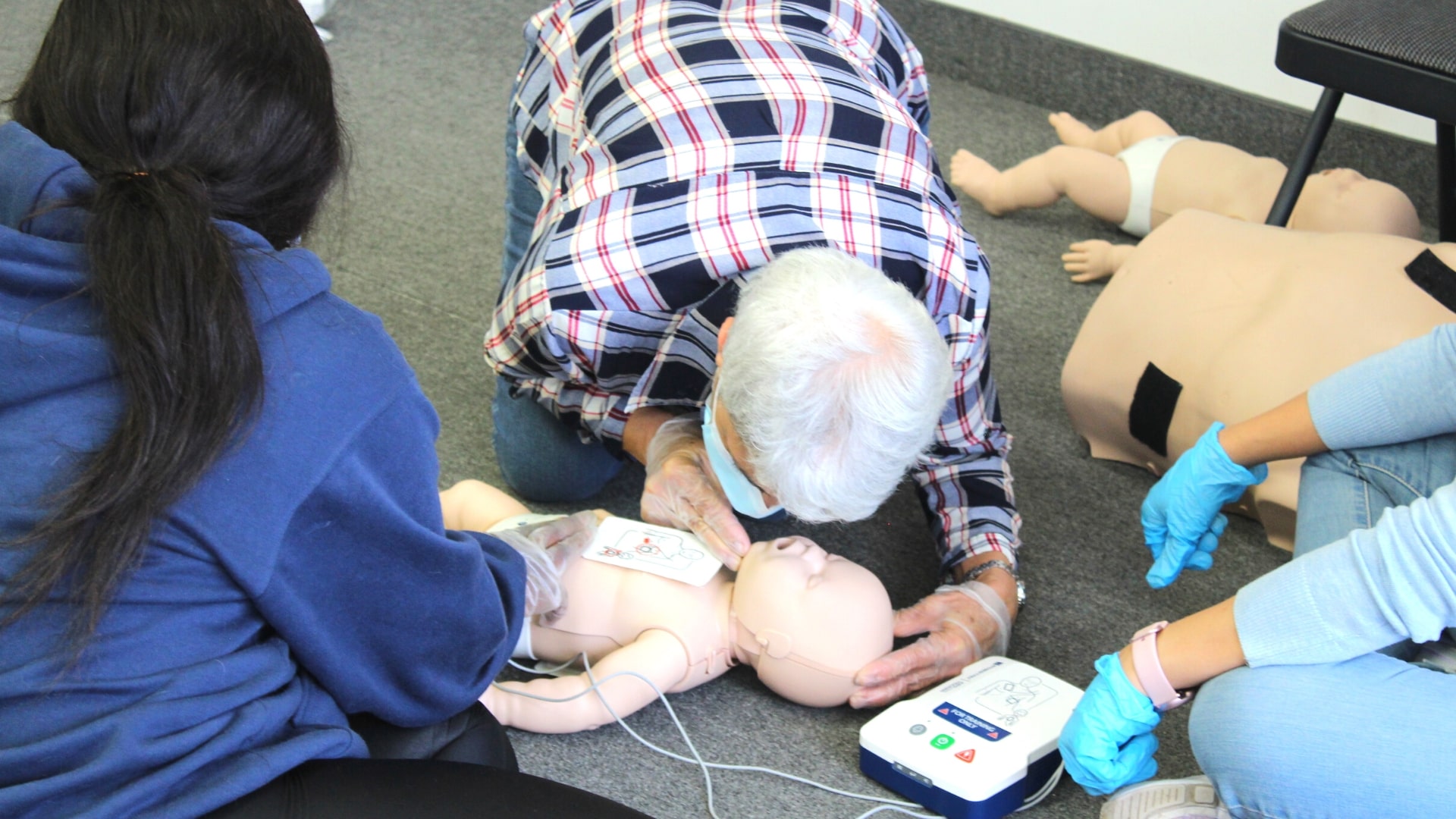
Children have flexible bones, ensuring they don’t get hurt when CPR is required. When performing CPR on an infant, it is crucial to make a complete seal over both the infant’s mouth and nose while administering rescue breaths. However, infants require special care because they are more delicate because of their lighter weight and bone density. Therefore, children and infant CPR teaches you to check for responsiveness and a pulse in different age groups and perform rescue breaths and chest compressions.
Child CPR Example
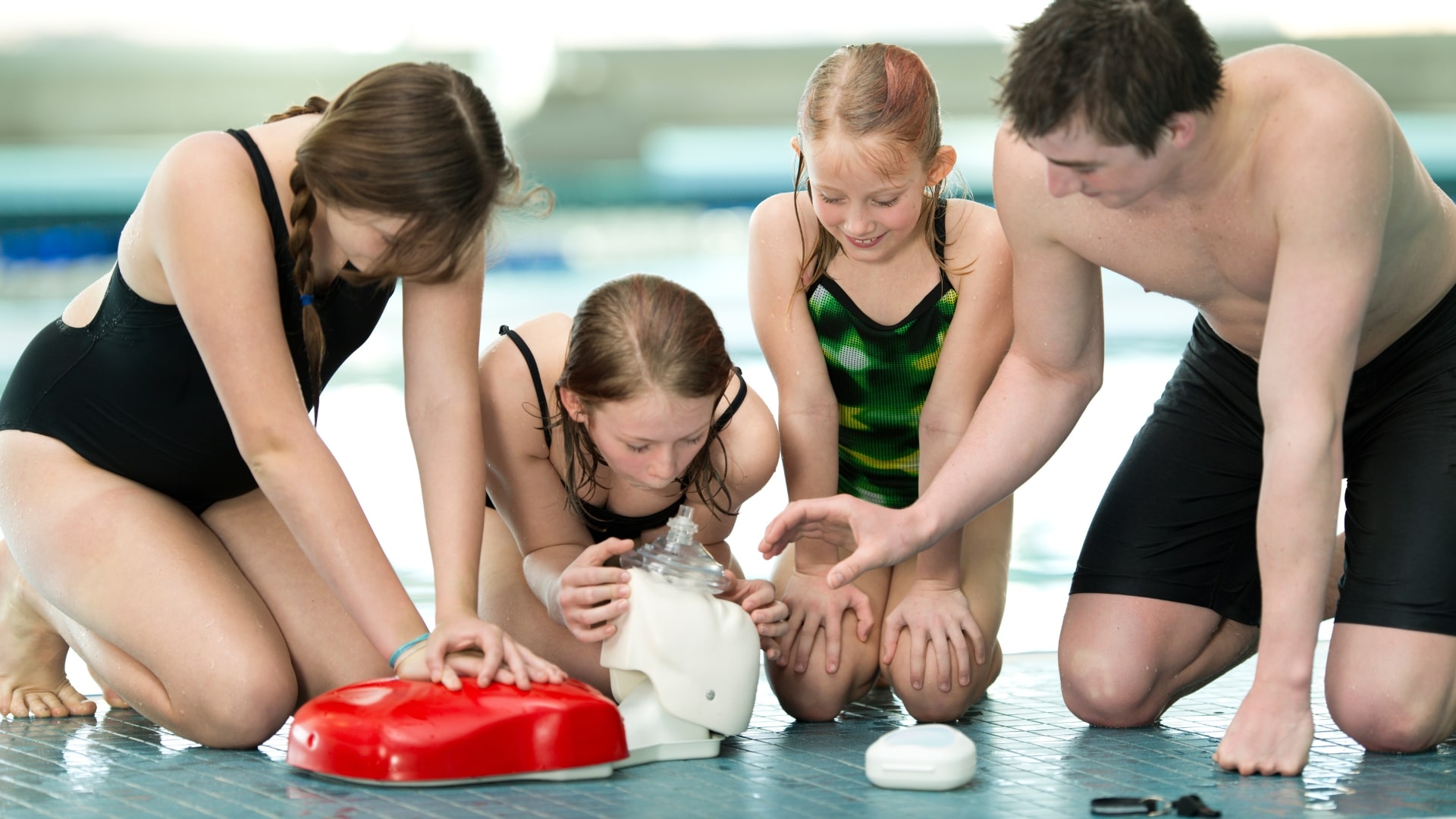
Now, consider a scenario where a child, about 7 years old, collapses at a family gathering. You ensure the scene is safe and call for emergency assistance. The cardiopulmonary resuscitation process starts with laying the child on a firm surface; you use one hand for chest compressions, pushing down about 2 inches deep at the same rate of 120 compressions per minute. After 30 compressions, you give two rescue breaths, covering both the mouth and nose, ensuring to see the chest rise. You repeat until professional help arrives.
Recognizing Cardiac Arrest
Recognizing cardiac arrest is crucial for performing CPR effectively. Cardiac arrest occurs when the heart suddenly stops beating or fails to beat effectively. Key signs of cardiac arrest include:
If you suspect someone is experiencing cardiac arrest, it’s vital to call the emergency response system immediately. Once you’ve alerted emergency services, start CPR if you are trained to do so. Quick action can significantly increase the chances of survival.
Checking for Responsiveness in Children and Infants
You can gently shake a young child to see if there is any responsiveness, but you can’t do this with an infant. Since a gentle shake is unsafe for babies, the correct way to check is to tap its foot or speak loudly to see if it responds.
Checking for a Pulse
In young children, you can check for a pulse in the same way that you would for an adult at the carotid artery. However, the best way to check for their pulse in infants is on the inner upper arm, known as the brachial artery.
Giving Rescue Breaths
To perform CPR on an adult, full lung-strength rescue breaths are required for better effectiveness. However, children need gentler puffs, and baby breaths even more so. Filling your cheeks with air usually suffices for infant rescue breaths. You must always ensure that the chest rises and falls during rescue breaths to achieve adequate chest rise.
Additionally, the head is always tilted back gently when performing rescue breaths on a young child or infant.

Giving Chest Compressions
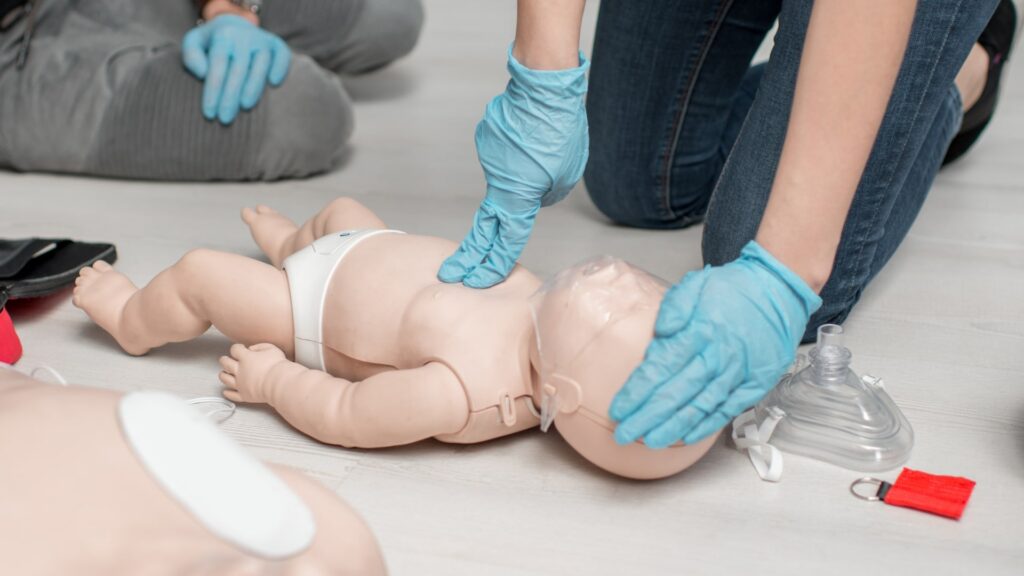
When giving chest compressions to infants, the CPR techniques differ; you should only use two fingers because of the size of their bodies. The depth of the compressions also changes; they are shallower than those given to adults and young children.
Calling for Emergency Response
Another difference between adult and children/infant CPR is when to call emergency services. With adults, immediately call 911 before beginning CPR unless you think they have a blocked airway.
With infants and children, always begin CPR immediately and call 911 after a few minutes or when it regains consciousness. Why is this important? Because children and infants have a better chance of survival when performed immediately, therefore you need to start chest compressions immediately. Of course, in cases where two people are present, one can perform CPR, and the other should call in all cases, whether they are adults, children, or infants.