A bleed from the nose is not usually a sign of a severe problem, but it can be pretty frightening. Doctors call nosebleeds epistaxis, which refers to a nosebleed from one or both nostrils. It is usual for a nose to bleed for anything between one and fifteen minutes, and the flow can either be light or heavy. Frequent nosebleeds can indicate a problem and lead to anemia if not controlled.
Continue readingIs it Difficult to Become a Private Investigator in Ontario?
Generally, in Canada, the most challenging part of becoming a private investigator (PI) is getting a license for the province you want to become a PI. Otherwise, the process in Ontario is more straightforward than you might think.
Continue readingWhat Can You Use as a Splint?
With the onset of summer and the increased number of outdoor activities, the probability of getting injured also increases. If you have injured a bone or joint, then splinting it may help. When dealing with such conditions, provide pain relief to the injured region using splints.
Continue readingHow to Know When Someone Needs CPR
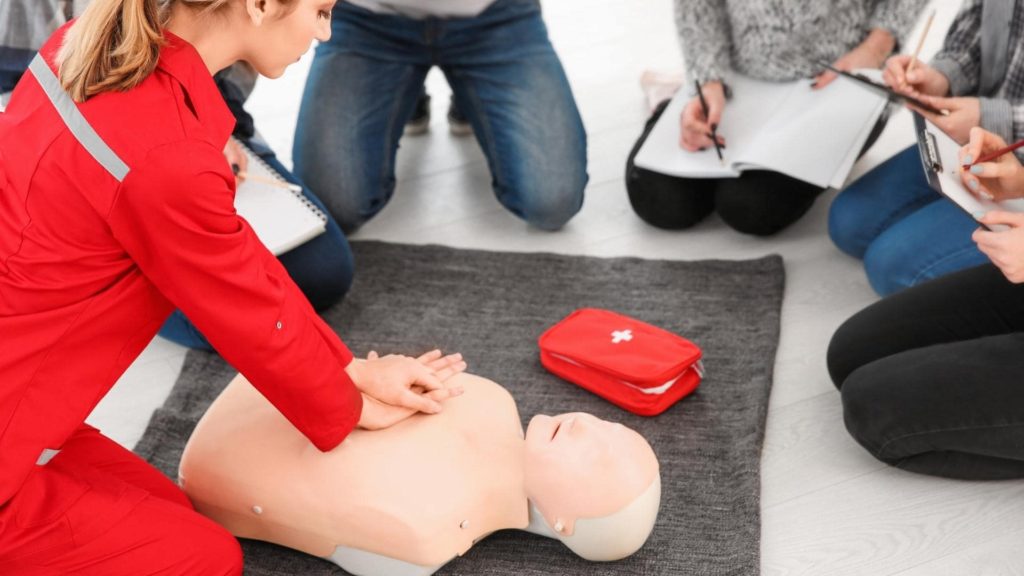
CPR is one of the most essential life-saving skills that can help someone survive if they have stopped breathing after cardiac arrest or an accident. However, a lack of knowledge is debilitating during an emergency because it can prove harmful.
Continue readingHow to Help Someone With Anxiety
It is normal and healthy for all of us to have some anxiety, but when it becomes excessive, it can be a problem. In small amounts, stress is beneficial because it keeps us alert to threats and dangers. People with severe anxiety need help and support because they may not be able to control their thoughts and fears, causing them to spin out of control.
Continue readingChoosing the Right First Aid Course in the GTA
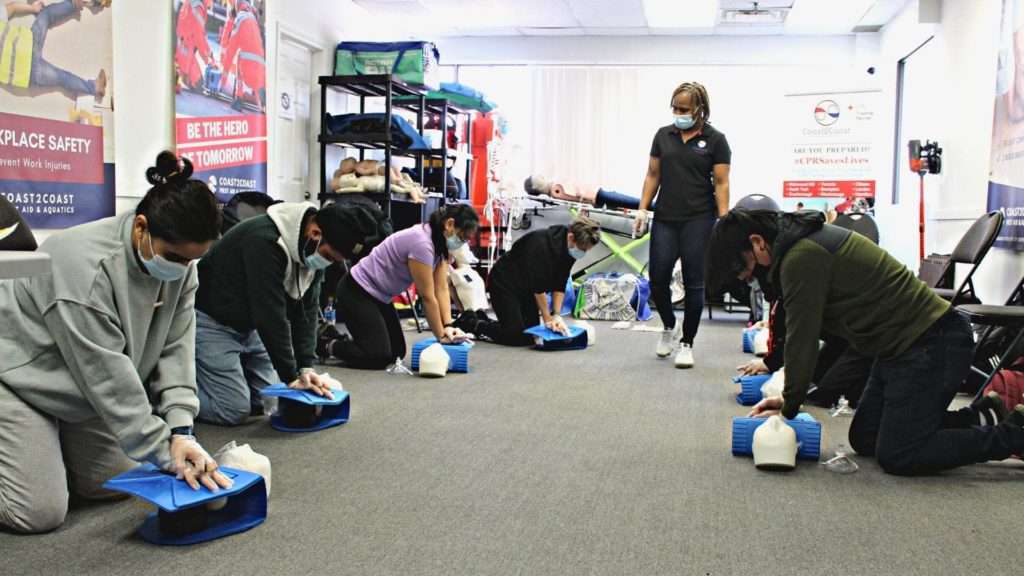
There are several reasons why everyone in the Greater Toronto Area (GTA) should consider taking a First Aid course. The first one is if it is a requirement for their work or school. However, First Aid is also important for everyone because the knowledge & skills obtained may help save the life of someone in an emergency in the future.
The first aid course has two levels which are Emergency First Aid and Standard First Aid. We recommend our students complete Standard First Aid as it focuses on practicing the skills and polishing the knowledge through hand on practice as compared to Emergency First Aid. This blog will guide you in choosing the right first aid course in the GTA.
Learn more about First Aid Courses in GTA
Different Levels of First Aid Training
There are several reasons why someone will decide to take First Aid & CPR training in the GTA. Emergency and Standard First Aid are the two most popular First Aid levels. The main differences between the two courses are the time it takes to complete the training and how extensive the learning experience gets in each of the courses.
Most workplaces and schools state what level of training is required, but someone may want to do the course as they prepare to become a parent, caregiver, or to help someone in an emergency. Read on to find out the essential differences in First Aid training and choose the right course.
Which First Aid training is Right For You?
People requiring First Aid training should always verify which course is required before registering. Let’s discuss our most popular First Aid & CPR training courses:
Standard First Aid & CPR/AED
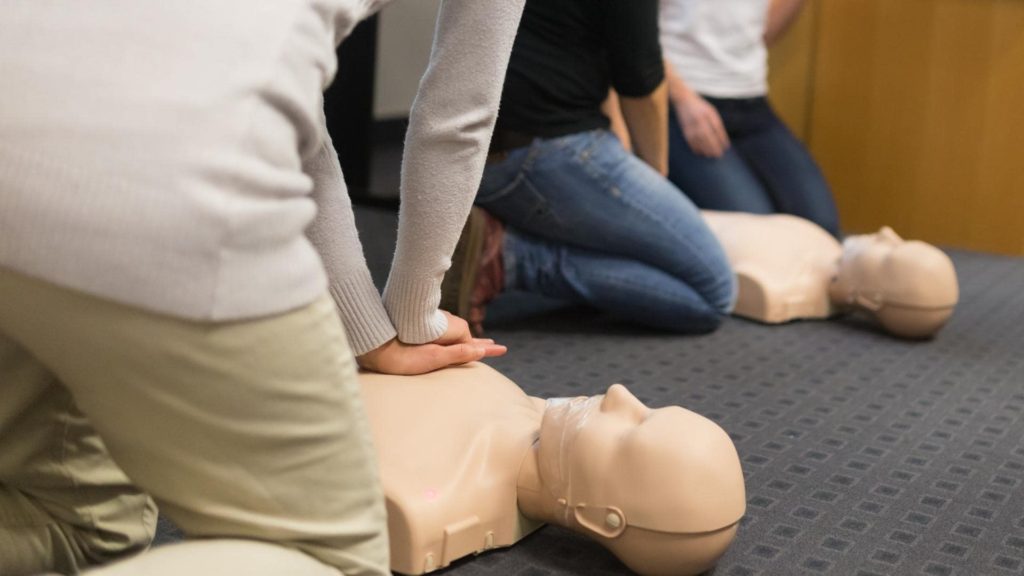
Standard First Aid CPR/AED training complies with the provincial workplace regulations of several careers. With this online blended course, there are two sections, and it includes a 7-8 hour online section and 8 hours of in-class training.
In addition to the online blended training format, there is also the traditional course which requires two days of in-class training. Participants learn all the skills to confidently help victims of life-threatening and non-life-threatening emergencies from accidents and illnesses.
At Coast2Coast, we combine Standard First Aid with CPR level C to ensure participants can provide CPR to adults, children, and infants.
Depending on the workplace, WSIB in Ontario may recommend employees complete Standard First Aid & CPR/AED. The requirement includes some employees at provincial and municipal levels with workplaces that have more than five employees per shift or floor. Employers must ensure that enough employees have the Standard First Aid training so that someone with the training is available at all times during work hours.
Some of the occupations requiring Standard First Aid & CPR/AED training include professionals and scholars in the following fields:
- Daycare employees
- All police and border control
- Firefighters
- Ski-patrol and lifeguards
- Employees in personal support, babysitting, childcare, youth groups, and special needs persons
- Construction workers
- Healthcare workers, nursing students, and pharmacists
Emergency First Aid & CPR/AED
Some jobs just require Emergency First Aid & CPR/AED training. WSIB in Ontario recommends it for some workplaces and individuals that require less intense First Aid training. Once again, it’s necessary for employers to make sure that the requirements laid down by the WSIB Regulation 1101 must be met at all times. This includes having access to a First Aid Kit and employees depending on the size of the organization being first aid certified. It is essential that everyone checks with their school or job before registering.
Training for Emergency First Aid & CPR/AED varies according to the level chosen but is more or less an eight-hour course. Participants can choose an all-in-class course or the online, blended course.
These occupations usually need an Emergency First Aid & CPR/AED certificate:
- Staff at recreational facilities and community centers
- Taxi drivers
- Provincial and municipal drivers
- Councilors and youth workers
- Parks and Recreation staff
- Coaches and instructors
- Technicians working in medical labs
Different Training Providers
The proper training and approval are vital in First Aid training. Coast2Coast is a Canadian Red Cross and Heart & Stroke training partner. The top-notch professional instructors also provide medical students with the following Heart & Stroke training:
Basic Life Support
Pediatric Emergency Assessment, Recognition and Stabilization (PEARS) training
WSIB Approved
It is essential that First Aid training for the workplace in Ontario is WSIB approved. The Workplace Safety and Insurance Board ensures all workplaces practice the required health and safety standards, and the board provides liability coverage for employees. Employers cover the fund entirely.
Choose Coast2Coast for Your Training
Choosing the right First Aid course in the GTA is easier than you think. Coast2Coast, a Canadian Red Cross training partner and WSIB approved First Aid training provider, offers several courses, making it easy to find the First Aid training required for any career in the province. Based in the GTA of Ontario, Coast2Coast makes it easy to register and participate in its First Aid courses provided by only experienced instructors.
Always be prepared to save a life, get certified today!
Register for First Aid & CPR Training
What You Must Know About Opioid Overdoses
Over time, reliance on opioid usage has increased in Canada. Figures from responses to a Canadian Community Health Survey in 2018 show that 13% of Canadians reported using opioids the previous year, and 9.6% of them used it in ways that could harm their health.
Continue readingWhen Will I Receive My First Aid and CPR Certificate?
Whichever level of First Aid and CPR training you need, on completing the course, you earn a Canadian Red Cross approved certificate. The skills and life-saving techniques you learn are invaluable, whether part of a work requirement or just to help others. When training at Coast2Coast, your First Aid certification is valid for three years.
Continue readingWhat to do when Stung by a Bee
Summer is about to begin in Ontario which means the bees are out! Bees play an important role in our world by pollinating our plants so we can eat. Without bees, we would not have the diversity of food we have today. Bees are a necessary insect in our world which is why it is so important to save them!
Unfortunately, many people are afraid of bees because they can sting. It is important to keep in mind that bees typically only sting if they are trying to protect themselves or their nest. Wasps, on the other hand, are more likely to sting and are often confused with bees.
Most people have no adverse reactions when stung by a bee, except for the initial stinging, pain, and redness. However, anyone allergic to bee stings can suffer severe symptoms from the allergic reaction. Multiple bee stings or an allergic reaction constitute a medical emergency, requiring an immediate medical response. In this blog, we will discuss what to do when stung by a bee.
Learn How to Take Care of a Bee Sting
Why bee stings cause allergic reactions
Bee stingers are barbed, and when they sting, it is usually left behind in the skin. From the moment a person is stung, the sting releases venom into the skin for up to a minute. The pain and swelling people feel are caused by the proteins in the poison. Some people are also allergic to hornets, wasps, yellow jackets, and it’s always good to run tests to determine what allergies a person has, helping to prevent placing them at risk if stung.
In some people, this venom triggers a severe reaction in their immune system, causing it to produce immunoglobulin E (IgE). IgE is an antibody used by the body to fight viruses and parasites, and when released in response to the sting, allergic reactions like swelling, hives, and breathing problems.
Sometimes, reactions to a bee’s sting can differ. Therefore, it’s best to look out for the reaction signs to the sting.

How to treat bee stings
Treatment for bee stings depends on the severity of the reaction. After a bee sting, a person should calmly walk away from the area to avoid another sting. If the bee’s stinger is in the skin, the best way to remove it is to scrape it out, but never use a tweezer because this pushes more venom into the area.
Mild to moderate reaction
If the bee’s stinger is in the skin, the best way to remove it is to scrape it away with a plastic card (such as a credit card). Next, wash the sting area with clean water before applying a cold pack. The cold pack will control swelling. Be careful not to freeze the skin, though. Place a cloth between the affected area and cold pack.
Painkillers can relieve the pain, and an antihistamine reduces itchiness and inflammation. These symptoms should only last a few days. Scratching the area can make the itching and swelling worse and increase the risk of infecting the sting area. Continue monitoring the sting for allergic reactions or anaphylaxis.
Severe reaction
In most cases, reactions of the immune system go unnoticed as the body defends against antigens. However, when there is a severe or anaphylactic shock, the immune system has an explosive reaction. Typically, anaphylaxis will begin within a few minutes of the sting or up to 30 minutes. Rarely will you suffer from anaphylaxis hours later.
In a severe allergic reaction (anaphylaxis), an epinephrine injection (adrenaline) helps reduce the severity. Bee stings can sometimes cause cardiac arrest within minutes in those allergic to them. Emergency responders will often administer oxygen, and once at the hospital, doctors may also administer intravenous fluids.
The symptoms of anaphylaxis include skin reactions, constricted airways resulting in breathing difficulties, nausea, dizziness, and wheezing. People with known bee allergies usually carry an EpiPen (an epinephrine injection device) and use it immediately after a sting.
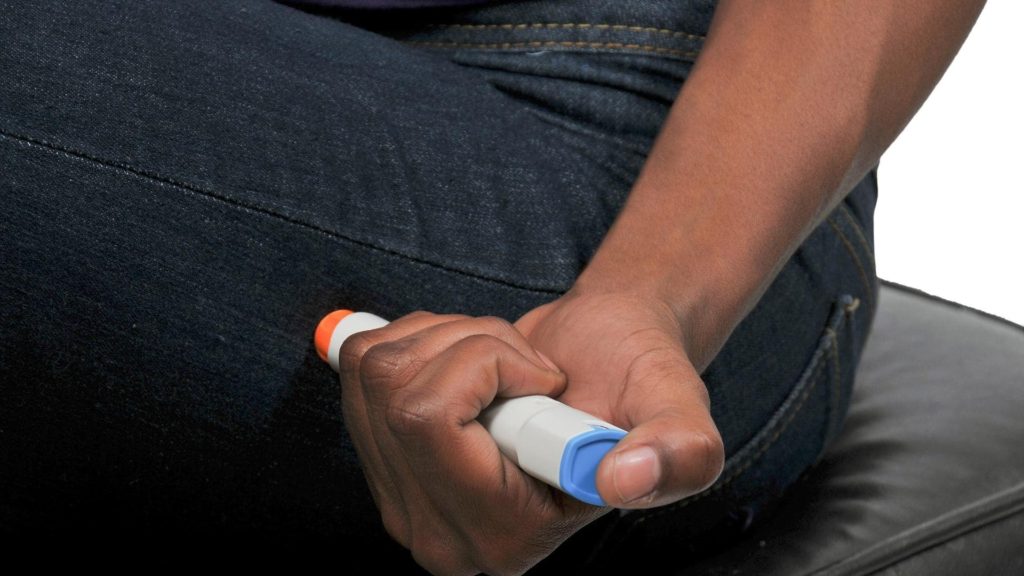
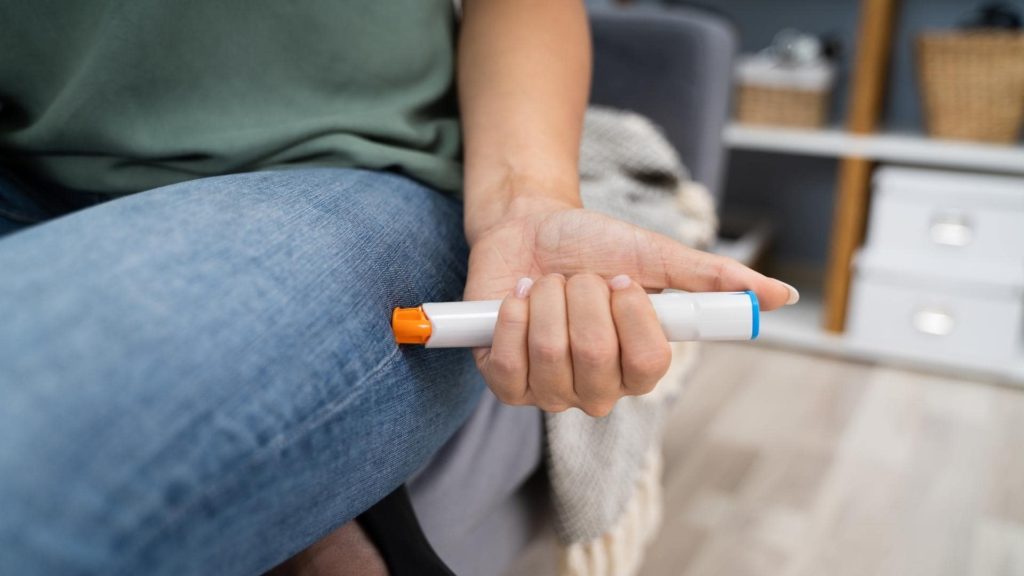
Most people can administer the EpiPen injection themselves on the outer thigh, even through clothing if needed. If they cannot, in the absence of a first responder, anyone with the proper training can help them to administer the adrenaline to help save a life in an emergency involving an allergic reaction.

How to use an EpiPen
- Remove the safety cap by pulling straight
- Hold the epipen (orange side) against the middle third of the person’s outer thigh
- Push the epipen until you hear a click
- Remove the epipen and be cautious of an exposed needle
- Place the epipen into a container for the victim to bring to the hospital
- Ask the victim to rest until EMS arrives
- Rub site of injection for 30 sections (this helps with absorption)
- If the person is not feeling better within five minutes, you may inject a second dose (if available) into the other leg
People can suffer from an epinephrine overdose, so never administer more than two doses after each other. The signs of an overdose are difficulty breathing and irregular heartbeat.
After anaphylaxis, the person needs medical attention and should be cautious for at least 48 hours. They must also remember to get their new EpiPen since they can never leave home without it.
First Aid Training
Bee venom and other poisons are a real danger. First Aid training can help protect you and others by knowing what to do when faced with cases like these, whether the symptoms are mild or severe.
Our Standard First Aid training at Coast2Coast encompasses the training required to help in several emergencies, including those involving bee stings. Complete your training in an Online Blended format! Learn theory online prior to attending a one-day in-class training session. Select your area and register today.
Register for First Aid & CPR Training
Benefits of Private First Aid Training
Understanding how to provide proper first aid or CPR to an injured or unconsious person is important. Accidents can happen at any time which is why we should be prepared. A great way to learn these life-saving skills is to complete a First Aid & CPR training course.
Did you know that many professions require their employees to be first aid and CPR certified? That’s right! Everyone from nurses to office staff may be required to complete a First Aid & CPR training course. In Ontario, many companies are covered by the Workplace Safety and Insurance Act (WSIB). These companies must follow Regulation 1101 regarding first aid training and safety requirements.
One of our goals at Coast2Coast First Aid & Aquatics is to provide everyone with some form of First Aid and CPR training, ensuring they are confident enough to assist in an emergency.
Do your employees need to complete first aid training? At Coast2Coast, we offer Private First Aid training courses for groups of eight participants or more. There are many benefits of Private First Aid training compared to public courses. Let’s discuss more below!
What is Private Training?
As a Canadian Red Cross training partner, we are dedicated to provide several WSIB-approved First Aid and CPR courses. Most people do the training in their own time by attending a public course. However, we also provide Private First Aid training. With Private training, we take care of everything for your group!
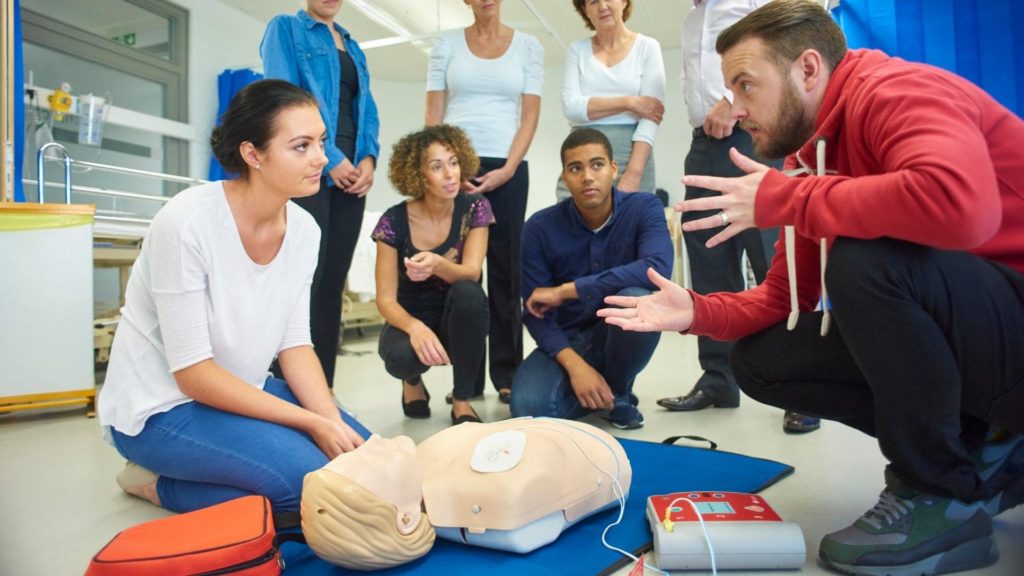
At Coast2Coast, Private Training is a way for groups of eight or more participants to get trained together. There are many benefits to Private First Aid training such as certifying many employees at once, convenient scheduling, choice of training location/time, amazing discounts and more!
Arranging a Private First Aid training is simple. All you need to do is fill out a form on our website then one of our Private Training specialists will contact you. Once the details of your training are determined, we will finalize your training by booking one of our experienced Canadian Red Cross instructors.
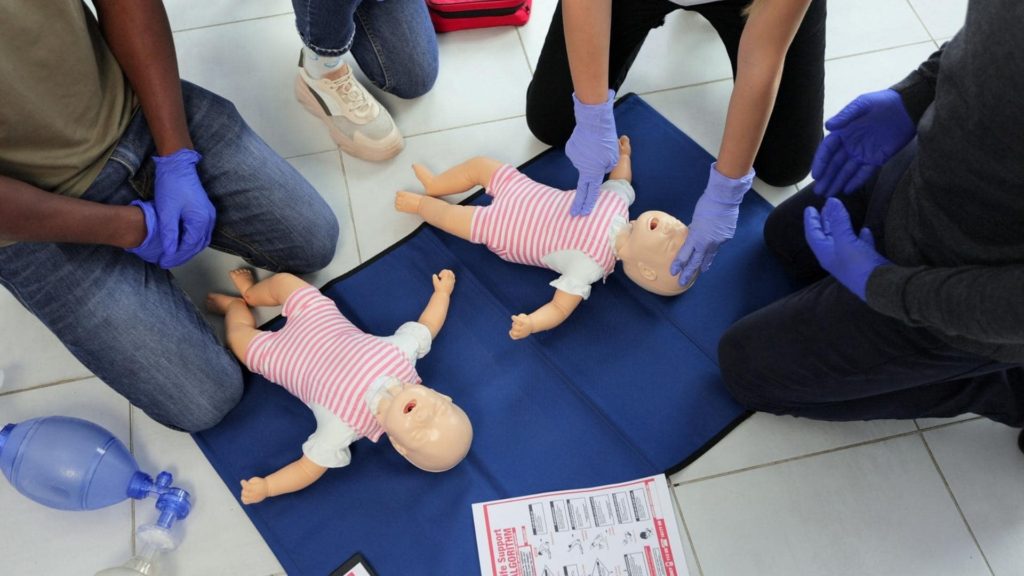
Our highly-trained instructors provide Private First Aid & CPR/AED training to groups of people at their chosen location. If your school, business, home, etc., is unsuitable for the training, we host the training at any of our facilities across Ontario. Clients can choose from several types of training levels, depending on their First Aid requirements. These include:
- CPR/AED Level A/C
- Emergency First Aid & CPR/AED Level C
- Standard First Aid & CPR/AED Level C
- Marine Basic First Aid
- Basic Life Support (BLS-HCP)
- Professional Responder programs (e.g. First Responder or Emergency Medical Responder)
- Youth programs (e.g. Babysitting or Stay Safe)
- And more!
On completion, the candidates in the Private First Aid training course receive a WSIB-approved certificate once their invoice has been cleared. First Aid and CPR certificates are valid for three years, and Basic Life Support certificates for one year.
Who Needs Private Training?
Any group of people, whether they are scholars, teachers, employees, medical professionals, friends, or family members wanting to complete a First Aid & CPR or Basic Life Support course, are the perfect candidates for Private First Aid training. Most often, employers who need to certify more than eight employees register for Private First Aid & CPR training.
As mentioned before, many companies are required to train their employees in first aid under WSIB’s Regulation 1101. Private training makes it convenient for them to complete this. Although, Private training is not only helpful for companies; it’s also helpful for groups of friends, families and more!
No one can deny the importance of First Aid training. Many people put it off because they feel they don’t have the time, don’t know how to register for it or think they don’t need it. Private training solves this problem because just one person needs to organize the training for everyone. Then one of our professional instructors arrives at the given date and time to do the training.
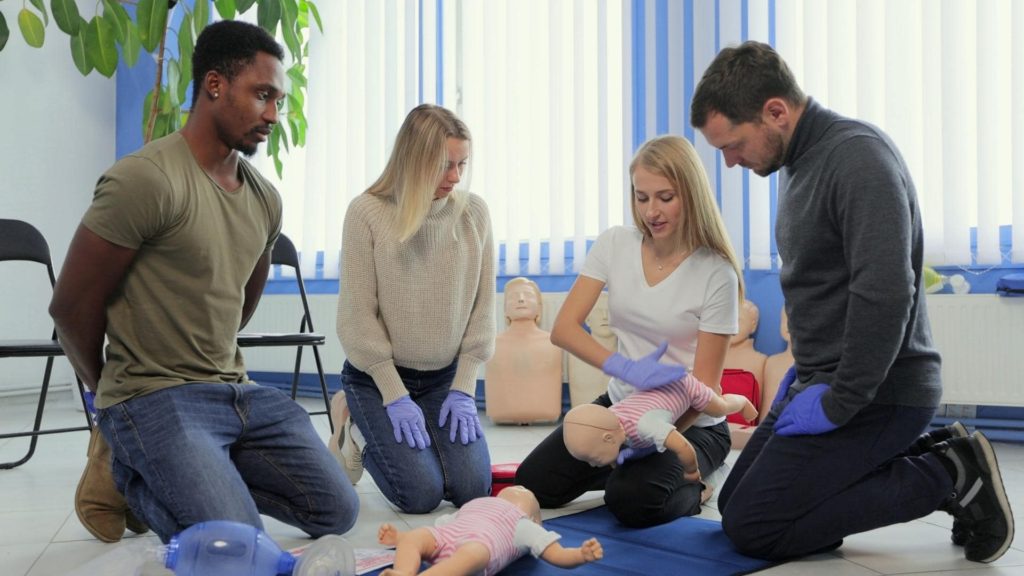
First aid training does more than just give you the confidence to help save lives. The person who provides first aid during an emergency offers the victim comfort and helps prevent the worsening of the victim’s situation. The more people within a group who have the training, the better it is for the whole.
Besides giving your group the confidence to care for others, private First Aid training encourages you all to live healthily and safely because of the knowledge and awareness you will learn from the instructor.
Empower Your Team with First Aid and CPR Training!
What are the Benefits of Private First Aid Training?
There are several benefits of Private First Aid Training:
- It saves time because everyone can take the course together, instead of taking time off separately.
- Everyone is simultaneously prepared to face any emergencies.
- Coast2Coast has fantastic offers and discounts for private training groups.
- Convenience of having an instructor come to you for the training on the day, time, and place that suits the whole group.
- Booking the private training is a simple process. Just fill in the form, providing the number of participants, type of course, and level, and one of our customer service representatives will contact you within 24 hours.
- All participants will receive a WSIB-approved certificate through the Canadian Red Cross.
Contact us at Coast2Coast by phone or email if you have any questions regarding Private First Aid & CPR/AED training courses.

How to Register for Private Training
Register for Private First Aid Training today and ensure your fellow colleagues, family and friends get the confidence required to save others. The knowledge from the training is invaluable to everyone, helping you become aware of better assessing your surroundings and any situations that may arise. The training gives you the required confidence to help save and rescue any person who needs immediate help.
The Private Group Request Form is the quickest way to register for Private First Aid Training with Coast2Coast. Once the details are submitted, someone from our office will contact you within 24 hours. Together you can organize the training at a convenient day, time, and place for your private group training. Private training is available in Western Ontario, Eastern Ontario, and the Greater Toronto Area.
We hope you now understand all of the benefits of Private First Aid training!
Register for First Aid Training
Register today for a First Aid Training course and learn how to deal with emergencies and keep your loved ones safe! Check out our facilities and book your spot now.